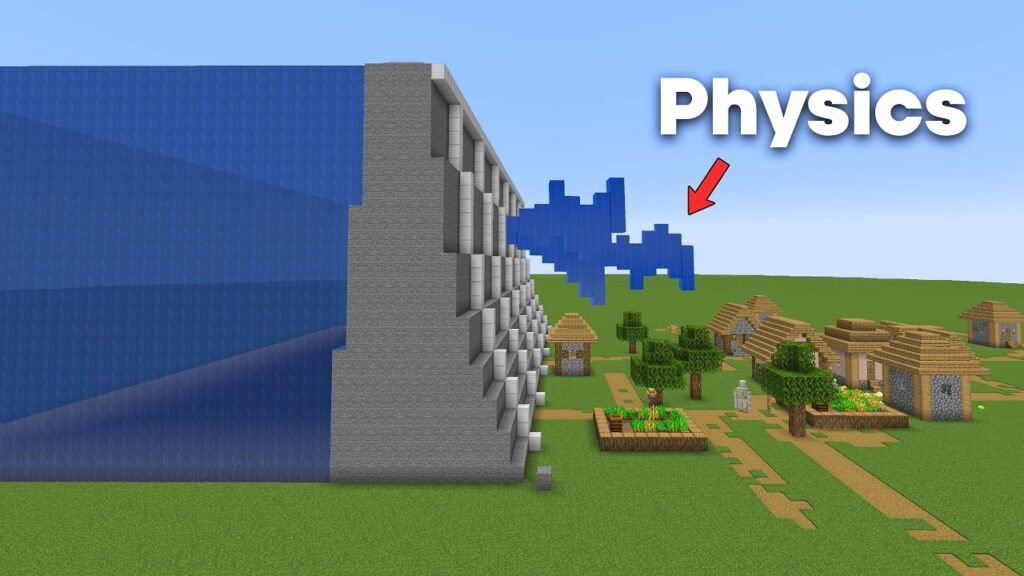
Minecraft Water Physics Explained
Introduction
Water plays a major role in Minecraft APK, affecting many parts of the game such as farming, exploration, building, and transportation. Although Minecraft water does not behave exactly like real-life water, it follows specific rules that players can understand and use to their advantage. Learning these mechanics helps you create better farms, underwater bases, and creative water-based designsMinecraft Water Physics Explained.
Understanding Minecraft Water Mechanics
In Minecraft, water works through a block-based system. A water source spreads into nearby empty spaces and creates flowing water. The movement continues until it reaches its limit or encounters an obstacle that blocks its path.
There are two main types of water:
- Water Source Block: The main block that generates water flow.
- Flowing Water Block: Water that spreads away from the original source.
A source block remains in place, while flowing water depends on the availability of the original source.
How Water Spreads in Minecraft
Water movement follows certain patterns instead of flowing randomly.
| Water Feature | Explanation |
| Source Water | The starting point that produces water flow. |
| Horizontal Movement | Water spreads across nearby open blocks. |
| Downward Movement | Water can travel farther when flowing downhill. |
| Block Restrictions | Solid blocks can stop or redirect water. |
| Updates | Water changes when nearby blocks are placed or removed. |
Interaction Between Water and Blocks
Different blocks affect water in different ways. Understanding these interactions helps players control water more effectively.
Solid Materials
Blocks such as stone, wood, and dirt prevent water from passing through. Players often use these materials to create rivers, canals, and controlled water systems.
Glass and Decorative Blocks
Glass allows players to build underwater windows and tunnels while keeping water contained outside the structure.
Farming Blocks
Water is necessary for crop growth because it keeps nearby farmland hydrated. Proper water placement can improve farming efficiency,Minecraft Water Physics Explained.
Creative Uses of Water
Minecraft water is not only useful for survival but also for advanced building projects.
Players can use water to create:
- Automatic farms.
- Boat transportation routes.
- Water elevators.
- Decorative fountains.
- Hidden base entrances.
- Mob collection systems.
With creative placement, water can become an important part of many Minecraft designs.
Water in Farming
Many crops require nearby water to grow properly. A well-designed irrigation system can help players create large and efficient farms.
Water is commonly used in:
- Wheat farming.
- Sugar cane farms.
- Carrot and potato farms.
- Automatic harvesting systems.
Planning water placement carefully saves space and improves farm performance.
Building Underwater Structures
Water physics also allows players to create unique underwater projects. Many builders use water mechanics to design impressive ocean creations.
Popular ideas include:
- Glass underwater homes.
- Sea tunnels.
- Marine bases.
- Hidden underwater rooms.
- Large aquarium designs.
Removing and controlling water correctly is important when creating these structures.
Useful Tips for Handling Water
- Keep a water bucket during exploration.
- Plan water placement before starting large builds.
- Use blocks to control unwanted water movement.
- Learn source block mechanics for advanced projects.
- Create backups before changing large water areas.
Common Water-Related Issues
| Problem | Solution |
| Water spreading unexpectedly | Place blocks to control the flow direction. |
| Difficulty removing water | Use sponges or replace water spaces with blocks. |
| Crops growing slowly | Ensure farmland is properly hydrated. |
| Water systems failing | Check source blocks and placement accuracy. |
Conclusion
Understanding Minecraft Water Physics can improve both survival and creative gameplay. By learning how water sources, flowing blocks, and different materials interact, players can design efficient farms, transportation systems, and amazing underwater builds. Mastering water mechanics opens up new possibilities and makes Minecraft construction more advanced and enjoyable.